

Ambassador-in-Residence
Meet Ambassador Polt
The ASU Ambassador-in-Residence provides international affairs support across the full range of ASU enterprises, starting and ending with our students. Ambassador Polt is available for monthly student career counseling sessions, teaches masterclasses in diplomatic skills and key foreign affairs subjects, and supports ASU global outreach initiatives.

ASU's 1st ambassador-in-residence talks about new role, shares advice for students considering foreign affairs
In May 1968, 14-year-old Michael Polt arrived at New York Harbor via passenger ship after emigrating from Austria with his mother, sister and stepfather. Shortly thereafter, he developed a passion for America, leading to a lifetime career in U.S. international affairs and diplomacy...More on ASU News.
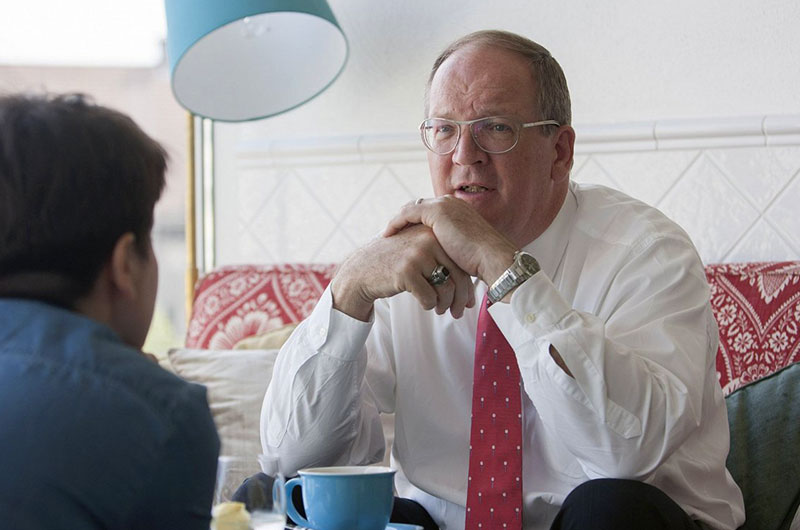
Ambassador-in-Residence Office Hours
Curious about U.S. foreign policy, international affairs or a career in diplomacy? Connect directly with Ambassador Michael C. Polt, former U.S. Ambassador and current Ambassador-in-Residence at ASU.
Fall 2026 dates
Time: 12:00–1:00 PM (AZ MST)
Why you should join
- Get insider insights into real-world diplomacy and U.S. foreign policy
- Learn about pathways into international careers
- Build connections with a seasoned global leader
- Ask anything—from career strategy to current world events

ASU Washington Diplomatic Roundtable
The ASU Washington Diplomatic Roundtable, hosted by the University’s Ambassador-in-Residence, meets quarterly at the Barrett and O’Connor Center in Washington D.C. to engage the international and U.S. foreign affairs communities ASU’s global initiatives and programs designed to make a positive social, economic and cultural impact around the world.
American Diplomat Podcast
American Diplomat is a podcast designed to enrich the study of diplomacy and foreign policy and to generate public support for career diplomatic practitioners. The show is the only podcast which features the personal narratives of our diplomats from retired senior officers and policy makers to those currently serving. By using a storytelling format, the show inspires young people to learn about the detailed reality of conducting diplomacy and foreign policy in a wide variety of circumstances and challenges. Its listenership resides in all fifty states and in 156 countries around the globe. The Leadership, Diplomacy, and National Security Lab is a proud sponsor of American Diplomat.
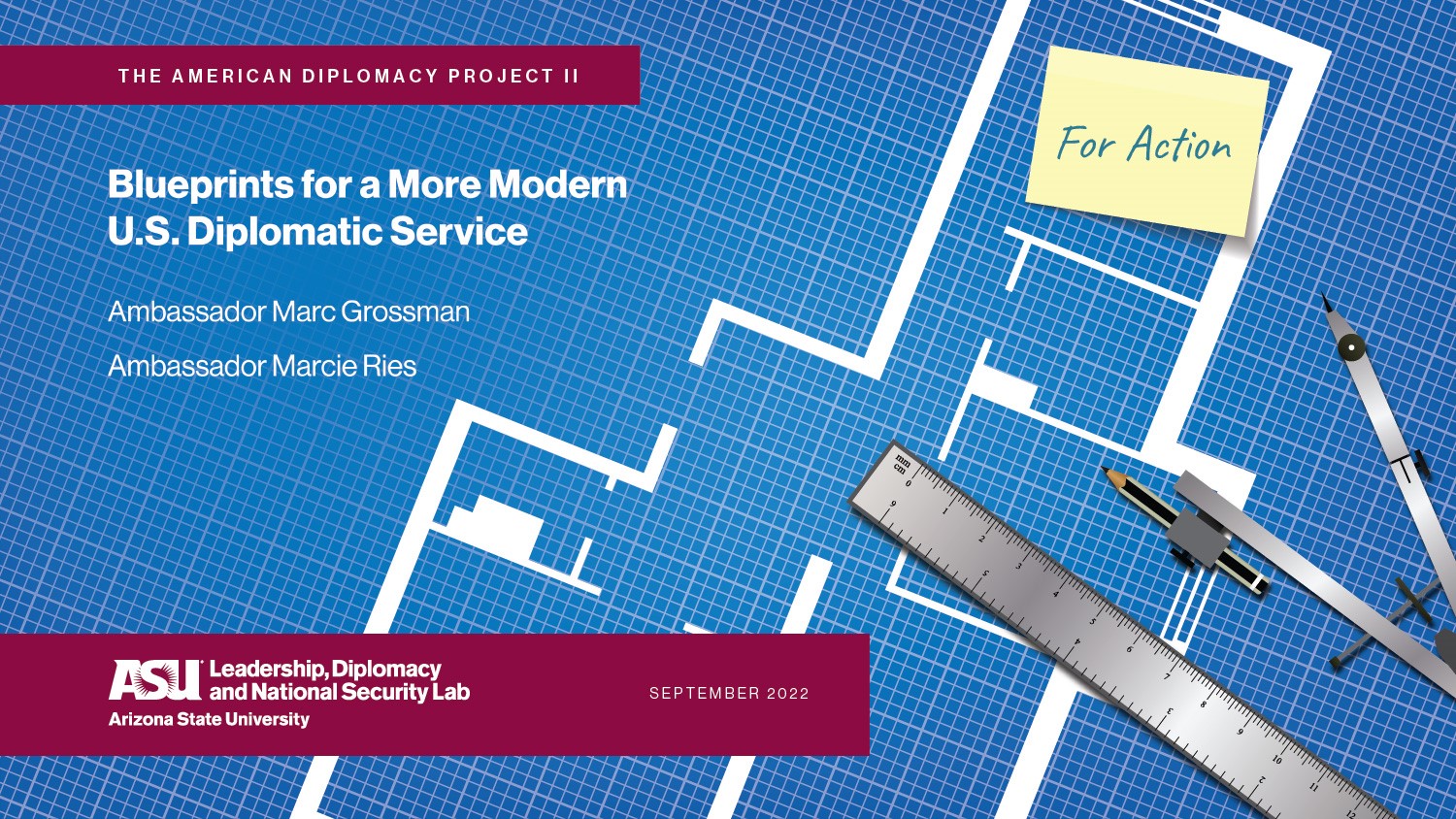
The American Diplomacy Project - Phase II
The American Diplomacy Project – Phase II, in collaboration with the Una Chapman Cox Foundation and ASU, will build on the original report published in 2020 by Harvard University’s Belfer Center for Science and International Affairs entitled The American Diplomacy Project: A U.S. Diplomatic Service for the 21st Century.
Arizona State University, through its Leadership, Diplomacy and National Security Lab, will now provide the new institutional home for assembling a detailed blueprint – a “workbook” – for carrying forward the original report’s plan for the revitalization and modernization of the United States Foreign Service. The work of the project will be directed by a team of former Ambassadors and will draw on extensive discussion with experts and current and former members of the Foreign Service.

National Security Act Project
Launched in 2026, this ASU-led feasibility study examines whether the National Security Act of 1947 remains fit for purpose in a dramatically changed global environment. Led by Ambassador Michael C. Polt and the Leadership, Diplomacy and National Security Lab, the initiative brings together senior diplomatic leaders, national security professionals, and ASU student fellows to assess how today’s complex geopolitical challenges align with security structures designed nearly 80 years ago. Grounded in democratic values, public understanding, and accountability, the project explores whether a modern update is needed and how such reforms can be made accessible and meaningful to the American people.